
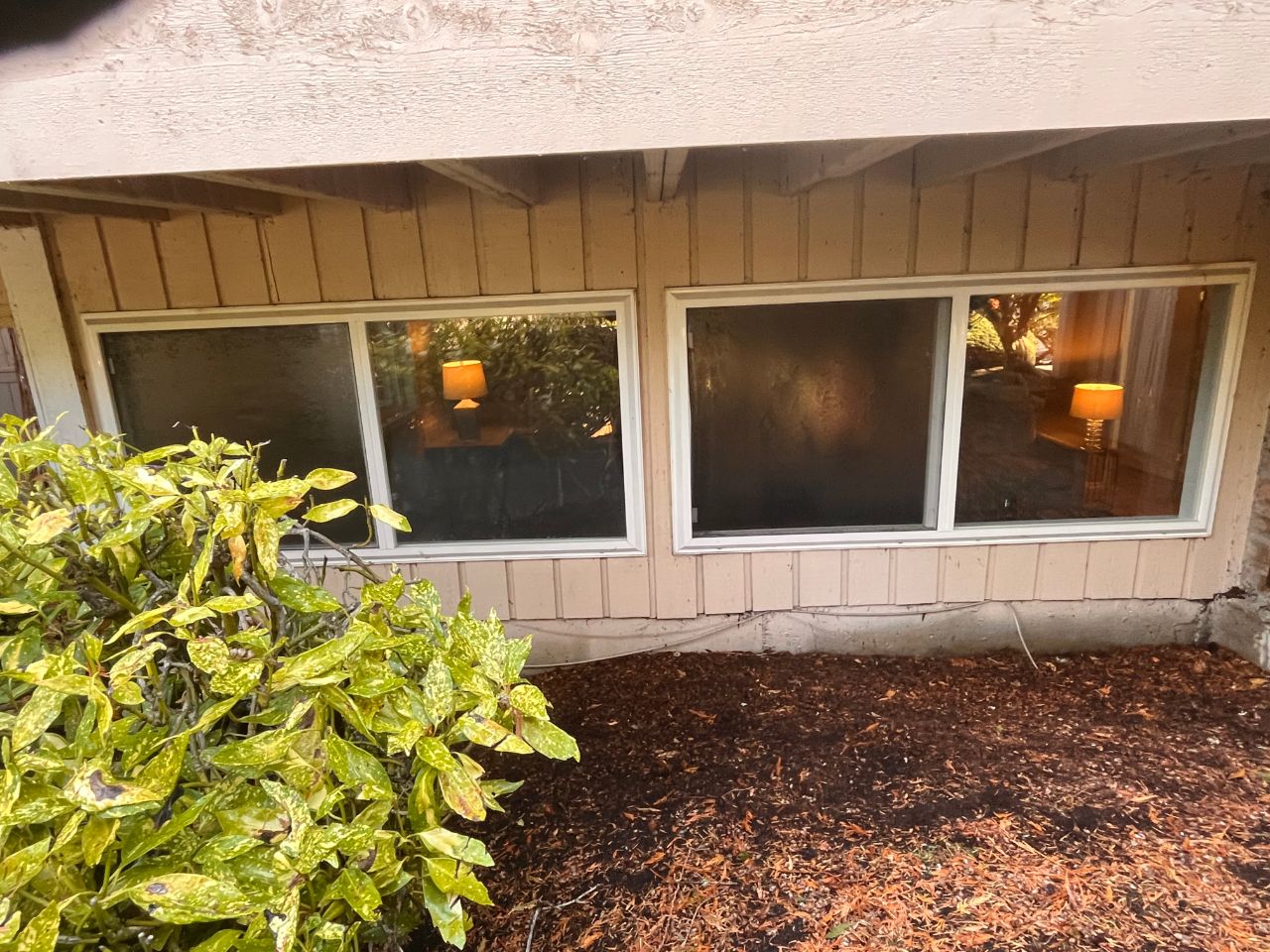
The real streak-free method pros use to wash windows, the tools worth owning, how often to do it, and when it's smarter to just call in help.
Washing windows the right way comes down to four things: the right tools, a squeegee instead of a rag, top-to-bottom technique, and picking a cloudy day over a sunny one. Skip any of those and you end up with the same streaky, smeared glass you were trying to fix in the first place.
Here's the thing nobody tells you before your first attempt: it looks like a 15-second montage on YouTube and turns into a 45-minute wrestling match with a garden hose, a roll of paper towels, and your own reflection judging you the whole time. We've been there. The method below is the one that actually works, not the one that looks good sped up 8x with music over it.
What Do You Actually Need to Wash Windows Properly?
You need a squeegee with a rubber blade, a scrubber or microfiber sleeve, a bucket, a few drops of dish soap in warm water, and two lint-free cloths, one for the frames, one for touch-ups. Skip the paper towels and glass-cleaner spray bottles; they're the main cause of streaking on bigger panes.
- Squeegee, a rubber-bladed squeegee (10-18 inches, depending on your panes) does more real work than any spray bottle. It's the single tool that separates a streak-free finish from a smeared one.
- Scrubber or microfiber sleeve, applies the soapy water and breaks up grime before the squeegee pulls it off.
- Bucket + a few drops of dish soap, warm water with a small squirt of dish soap cuts through dust, pollen, and the general PNW haze without leaving residue. Skip the vinegar unless you're dealing with hard-water spots specifically, and never use it on tinted or coated glass.
- Two lint-free cloths, one dedicated to wiping frames and sills first (so you're not dragging dirt back across clean glass), one for quick squeegee-edge touch-ups.
- An extension pole, for anything above the first floor, this replaces a ladder for most single-story and simple two-story setups.
What's the Actual Streak-Free Method?
Wet the glass, scrub it with soapy water, then squeegee it dry in a single continuous stroke, top to bottom or side to side, wiping the blade clean after every pass. Dry the frame first so water doesn't drip back onto glass you already cleaned.
- Pick an overcast, dry day. Direct sun or heat dries the soap before you can squeegee it off, which is the single most common cause of streaks. Washington gives you plenty of overcast days to work with, may as well use them.
- Dry the frame and sill first. Dust on the frame turns into mud the moment it touches your bucket water, and it'll run right onto the glass you just cleaned if you do the frame last.
- Scrub the glass with your soapy sleeve, overlapping each pass slightly so you don't miss a strip.
- Squeegee top to bottom in one motion, wiping the rubber blade on your cloth after each stroke. Overlap each new stroke slightly into the previous one.
- Catch the edges with a dry cloth before the last bit of water beads up and dries into a ring.
- Clean the outside horizontally and the inside vertically. If a streak shows up later, the direction tells you instantly which side of the glass it's on, a genuinely useful trick, not just a cleaning-blog cliché.
A well-done exterior-only pass on an average home runs about 20-30 minutes once you've got a rhythm going; budget closer to an hour your first time, because you will stop twice to rewatch the tutorial.
How Often Should You Wash Your Windows?
Most homes do fine with a wash twice a year, spring and fall, with a touch-up in between if you're near traffic, construction dust, or salt air. Homes under heavy tree cover or near busy roads often need a pass every 4-8 weeks to stay clear.
Snohomish County throws a lot at glass between October and April, moss spores, fir pollen in spring, and the fine grit that kicks up off wet roads all winter. If your view looks hazy by February, that's not just you; that's a normal PNW window cycle, and a quick exterior rinse-and-squeegee in late fall heads most of it off.
Is It Safe to Wash Your Own Windows Yourself?
Ground-floor and reachable second-story windows are fine to DIY with an extension pole and ordinary care. Anything that would need a ladder leaned against the house, a roof walk, or a second person spotting you is where the risk starts outweighing the money you'd save doing it yourself.
- Ground floor, easy reach, DIY is genuinely the right call here. An extension pole and 20 minutes gets it done without paying anyone.
- Second story, reachable from the ground with a pole, still fine for most people, just slower and with more arm fatigue than you'd expect.
- Anything needing a ladder against the house, this is where the risk math flips. Ladder falls send a steady stream of homeowners to the ER every year, and a second-story window is rarely worth that trade for a task that takes a pro 20 minutes with the right equipment.
- Dormers, steep rooflines, skylights, skip the DIY attempt entirely. This is exactly the kind of access a professional crew carries the right harness, pole length, or lift for.
What Does Professional Window Cleaning Cost Around Here?
Our rates run $349 for exterior-only, $449 for interior + exterior, and $549 for a full detail (screens, tracks, sills included) per visit. Nationally, window cleaning typically runs somewhere between $150 and $400 per visit depending on home size and whether both sides are done, so our tiers sit squarely in that normal range, not above it.
- Exterior Only, $349, the most popular option, covers every outside pane, frame wipe-down included.
- Interior + Exterior, $449, both sides of the glass, the pick for move-ins, spring cleaning, or before a big get-together.
- Full Detail, $549, adds screens, tracks, and sills, which is where most of the grime actually lives on an older home.
If you've been putting off hiring anyone because you assumed it was a bigger spend than it is, it's worth getting an actual number for your home before deciding DIY is the cheaper option. Once you count your own Saturday, a squeegee you'll use twice a year, and the one window you'll inevitably re-do because you can still see a smudge from the driveway, the math gets a lot closer than people think.
When Does It Make More Sense to Call a Professional?
Call a pro once your house has a second-story window you can't comfortably reach with a pole, once you're past roughly 15-20 windows total, or once you'd rather spend your Saturday doing anything else. A professional crew runs the same job in under an hour with commercial-grade tools.
If you're weighing the trade honestly: DIY wins on cost for a handful of ground-floor panes. Hiring wins once ladders, second stories, screens, or your own free time enter the equation, which, for most two-story Snohomish County homes, is most of the time.
Ready to skip the squeegee entirely? Get a free estimate and we'll tell you exactly what your home needs, no guessing required. We work homes across Snohomish and North King County; see if we're already in your neighborhood on our service areas page. Homeowners in Redmond and Shoreline book us for exactly this reason: they'd rather hand off the ladder part and keep the Saturday.