
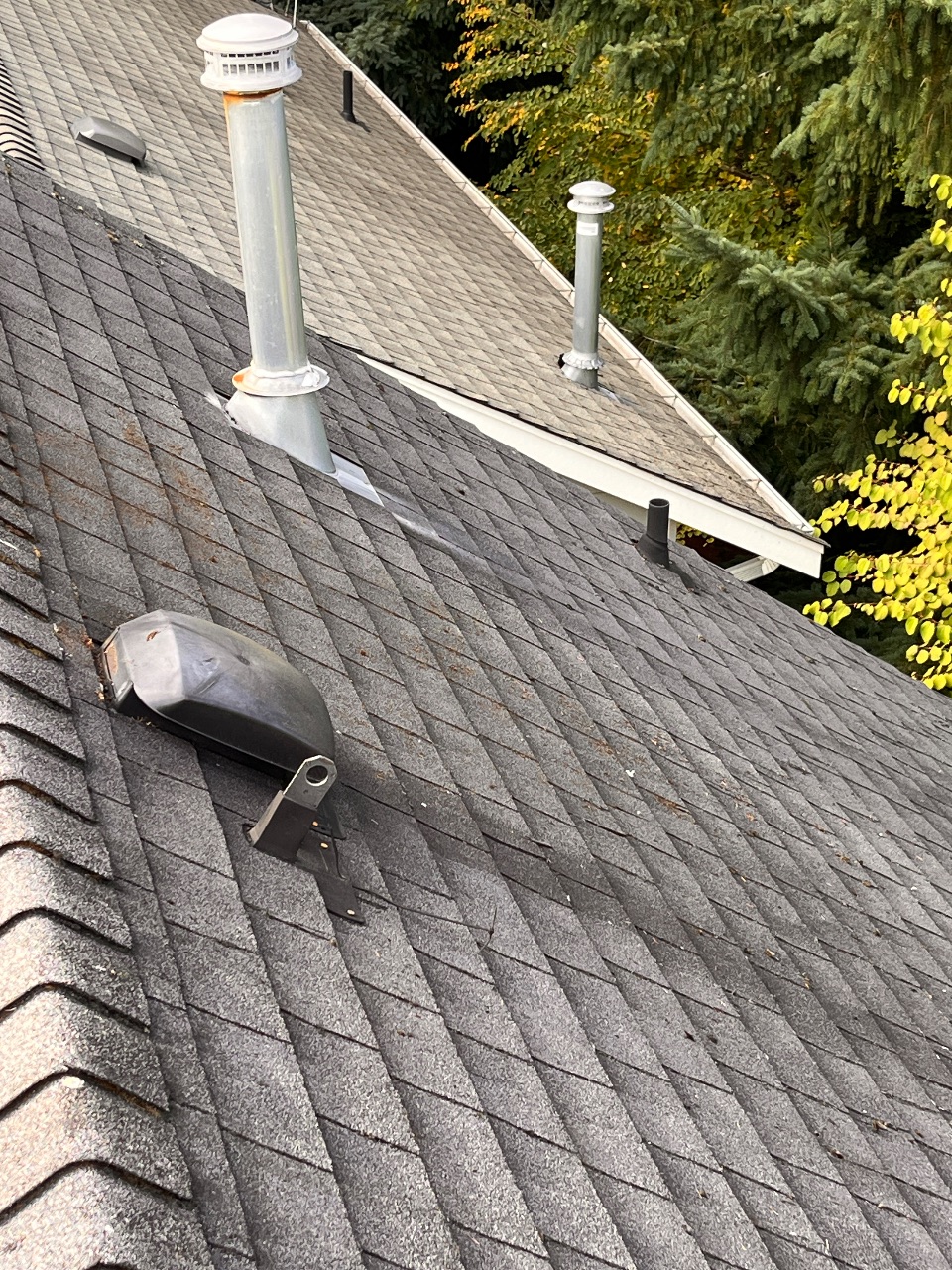
So, how much does it cost for gutter cleaning? For homes in our Snohomish County service area, a professional visit runs $299 to $449 depending on size and scope, not the $120 to $400 national range quoted by generic calculators, which assume one-story homes without our fir and maple cover. Here is exactly what decides where your house lands in that range.
Nobody has ever looked forward to gutter cleaning day. It ranks somewhere between a dentist appointment and assembling furniture with no instructions on the list of things people happily pay someone else to handle — which is exactly why you're doing this math instead of grabbing a ladder yourself.
How much does gutter cleaning cost on average around here?
A professional gutter cleaning in our Snohomish County service area runs $299 to $449 per visit, depending on your home's size and what's included. That's higher than the $120–$400 national range quoted by generic cost calculators, mostly because those averages assume a single-story home with light debris, not a two-story PNW house catching fir needles and moss every fall.
What's actually included at each price tier?
Each of our three price tiers covers a genuinely different scope of work, not just a bigger number for the same job. Even the cheapest option gets every gutter fully cleared and flushed — paying more buys additional work on top of that baseline, not a better version of the basic clean.
- Standard Cleaning ($299) — hand-clearing debris from every gutter run, flushing each downspout clear, and a final check for sags or loose hangers.
- Cleaning + Roof Blow ($399) — everything in Standard, plus blowing loose debris off the roof surface itself, so it doesn't just wash straight back into the gutters on the next rain.
- Full Detail ($449) — everything above, plus a close inspection of seams, end caps, and fasteners, with any small leaks we find spot-treated on the spot.
Why do two quotes for similar houses come in different?
Two neighbors with identical square footage can receive noticeably different quotes, and the gap is rarely arbitrary. Pricing moves based on how much debris actually has to come out and how long the crew needs on ladders to reach it safely — not on which street you happen to live on.
- Pushes you toward Standard pricing — single story, recently cleaned, minimal tree cover overhead, and easy ground access all around the house.
- Pushes you toward Full Detail pricing — two or more stories, heavy fir or maple cover, gutters that haven't been touched in over a year, or steep/gated access that slows the crew down.
If your house backs up to a greenbelt or sits under mature evergreens — common across a lot of our service area — expect the higher end of that range, not because the quote's padded, but because there's genuinely more material to clear out.
What add-ons bump the price up?
A handful of items get quoted separately because they sit outside a standard cleaning's scope: gutter guard installation, downspout extensions, and extra structures like a detached garage or shop. None of these are required to get your gutters working again — they solve a recurring problem instead of just treating this year's version of it.
Gutter guards, specifically, are the home-improvement equivalent of flossing — you know you should get them, you'll feel very smug for about a week after you do, and then you'll forget they exist until the thing they prevent happens anyway.
- Gutter guard installation — a one-time add-on that stretches out how long you can go between cleanings.
- Downspout extensions — routing water farther away from the foundation, usually a quick add during an existing visit.
- A second structure — a detached garage or shop with its own gutters, priced as its own small line item rather than folded into the house price.
Is doing it yourself actually cheaper?
On paper, yes — a few hours and a ladder costs less than $299. In practice, you're trading a predictable price for your own time, a wet ladder, and whatever's living in the downspout. HomeAdvisor and Thumbtack put the national average nearer $168–$238, since most places don't have our tree cover.
A wet aluminum ladder on sloped October grass is not a vibe. If your DIY plan involves one hand on the ladder rail and the other balancing a coffee you weren't supposed to bring up there, that's the universe politely suggesting you call a pro instead.
What should I ask before hiring whoever quoted the lowest price?
A quote that's noticeably lower than everyone else's usually means something got left out, not that you found a deal. Before booking, ask exactly what's included, whether downspouts get flushed (not just the gutter troughs), and whether debris leaves your property or gets left in a pile by the fence line.
It's also worth asking what happens if they find a problem mid-job — a sagging section, a crushed downspout, a hole from an old screw. A straightforward answer ("we'll flag it and quote the fix separately, nothing gets touched without you knowing") is a good sign. A vague answer, or no answer at all, usually isn't.
How often should I actually budget for this?
Twice a year covers most homes in our area: once in late fall after leaf-drop finishes, and once in late spring once seed pods and pollen have settled. Homes sitting directly under conifers sometimes need a third visit mid-winter, since fir needles don't stop coming the way deciduous leaves do.
Staying on that schedule also keeps you in Standard-tier territory instead of Full Detail. Gutters left two years let debris compost into something closer to dense wet soil than loose leaves — slower to clear, and more likely to reveal a sag or a leak once it's finally out. A job that could've stayed $299 becomes $449 through neglect, not through an upsell.
If you're in Snohomish or Mukilteo — or anywhere else across our service area — the fastest way to get an exact number for your specific house is a free, no-pressure estimate. We priced a job just like this in our service area on October 5th, and the quote took about as long to give as it took you to read this section.